
The EML Operator: Mathematical Uniformity at the Cost of Computational Efficiency
The EML (Exp-Minus-Log) operator is a single binary function, defined as $eml(x,y) = e^x - \ln(y)$, which theoretically replaces every button on a scientific calculator when combined with the constant

The Pitch
The EML (Exp-Minus-Log) operator is a single binary function, defined as $eml(x,y) = e^x - \ln(y)$, which theoretically replaces every button on a scientific calculator when combined with the constant '1'. Published by Andrzej Odrzywołek of Jagiellonian University in March 2026, this operator allows all elementary functions to be represented as uniform binary trees (Source: arXiv).
Under the Hood
The EML operator functions as a continuous-mathematics equivalent to the NAND gate or the Iota combinator (Source: Hacker News). By nesting this single operator, one can derive addition, multiplication, and trigonometric functions. A toolkit for this approach is currently available in the VA00/SymbolicRegressionPackage (Source: GitHub).
However, the mathematical elegance masks a significant "expression blow-up" problem. While a standard CPU handles multiplication in a single instruction, the EML representation requires a tree depth of 8 or more, involving at least 41 leaves for basic arithmetic (Source: HN/arXiv Table 4). This exponential complexity makes it entirely inefficient for standard CPU or GPU computation compared to established IEEE 754 implementations.
The operator has found immediate utility as a high-tier reasoning benchmark for the latest models. In recent tests, GPT-5 solved EML-based derivations on its first attempt, whereas Claude 4.5 Opus required a specific prompt nudge to navigate the tree depth (Source: Hacker News). This confirms the operator's value in testing the logic limits of 2026-era LLMs rather than improving production math libraries.
We still lack verified benchmarks for the proposed analog circuit or FPGA implementations mentioned in the research (Source: UsedBy Dossier). Furthermore, as of April 2026, the paper remains a preprint and hasn't cleared formal peer review, though a second version addressed early criticisms regarding complex domain edge cases where $e^z = 0$ (Source: arXiv v2). There is currently zero integration into mainstream frameworks like PyTorch 3.0 or NumPy 2.5.
Marcus's Take
Skip this for production, but keep the paper in your "Friday afternoon" folder. The EML operator is a brilliant piece of symbolic theory that is practically useless for backend engineering due to its horrific computational overhead. If you're building a custom symbolic regression engine or benchmarking GPT-5’s reasoning capabilities, the VA00 toolkit is worth a look. Otherwise, using a 41-leaf tree to multiply two integers is the definition of over-engineering.
Ship clean code,
Marcus.
Marcus Webb - Senior Backend Analyst at UsedBy.ai
Related Articles
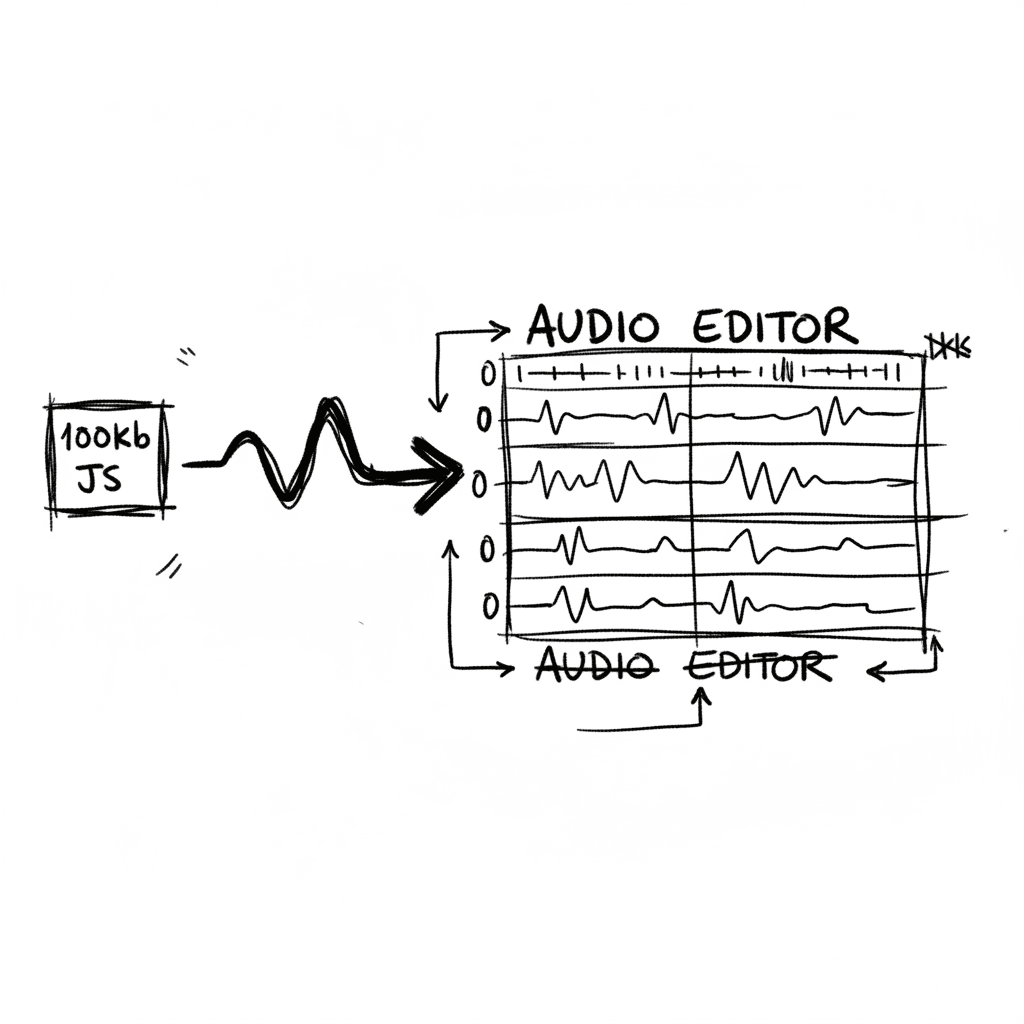
Audiomass: Multitrack Audio Editing via 100kb of Vanilla JavaScript
Audiomass is a browser-based, multitrack audio editor that operates entirely client-side with a remarkably small 100kb footprint (audiomass.co). It provides a workflow reminiscent of classic editors l
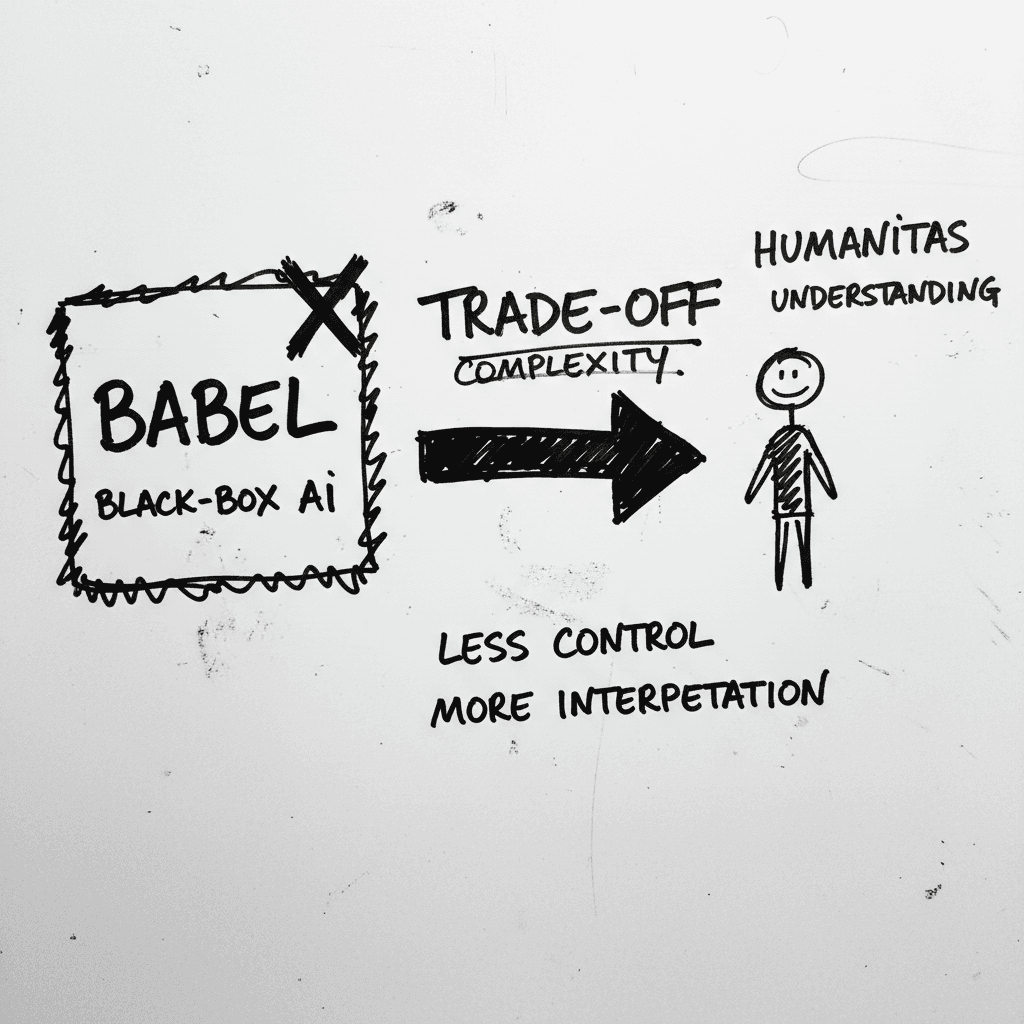
Magnifica Humanitas: The Vatican’s Framework for the GPT-5 Era
The document, signed May 15 and officially released today, was presented at the Vatican alongside Christopher Olah, co-founder of Anthropic and lead of its interpretability team (ncronline.org, Forbes

The Zero-Click Economy: Kagi Search vs. Google AI Mode
Google has effectively pivoted to an "answer engine" where Gemini 3.5 Flash provides conversational summaries, while Kagi remains the primary refuge for users seeking a human-centric, ad-free index. W
Stay Ahead of AI Adoption Trends
Get our latest reports and insights delivered to your inbox. No spam, just data.