
TinyLoRA: Extreme Parameter Efficiency via Fixed Random Projections
Researchers from Meta FAIR, Cornell, and CMU have demonstrated that updating just 13 parameters—roughly 26 bytes of data—can induce advanced reasoning capabilities in models like Qwen2.5-7B. This meth

The Pitch
Researchers from Meta FAIR, Cornell, and CMU have demonstrated that updating just 13 parameters—roughly 26 bytes of data—can induce advanced reasoning capabilities in models like Qwen2.5-7B. This method, dubbed TinyLoRA, achieves a 91.8% accuracy on the GSM8K benchmark by combining fixed random projections with Reinforcement Learning (source: arXiv:2602.04118). The tech community is currently debating whether this represents a fundamental shift in fine-tuning or a clever mathematical sleight of hand (source: HN).
Under the Hood
The core technical mechanism relies on "tiling" and SVD-truncated matrices. By sharing parameters across model depth and utilizing random projections, the researchers bypass the standard scaling limits of traditional Low-Rank Adaptation (source: NeuroTechnus). While the 13 parameters are the only ones "trained," they influence the entire weight matrix through a massive fixed random tensor (source: HN).
Reinforcement Learning, specifically Group Relative Policy Optimization (GRPO), is the actual driver behind these results. The paper notes that Supervised Fine-Tuning (SFT) fails completely at this extreme 13-parameter scale (source: arXiv:2602.04118). Essentially, the RL process is 100 to 1000 times more parameter-efficient than traditional gradient descent for reasoning tasks (source: MarkTechPost).
There are several significant engineering trade-offs and risks identified:
- SVD decomposition for initialization remains computationally expensive for models larger than the 32B scale (source: HN).
- GSM8K and MATH500 benchmarks are likely saturated in 2026 training sets, raising serious concerns about data leakage (source: HN).
- We don't know yet how this method generalizes to non-mathematical reasoning, such as legal analysis or creative synthesis.
- There is currently no evaluation against frontier models like Claude 4.5 Opus or GPT-5 (source: UsedBy Dossier).
The "13 parameter" claim is technically accurate but functionally misleading. It is the 2026 equivalent of claiming you can steer a freighter with a toothpick, provided the toothpick is attached to a pre-existing, highly complex hydraulic system.
Marcus's Take
Skip this for production and keep it in the research lab. While the math is elegant, the reliance on SVD initialization makes it a bottleneck for the massive clusters we are running in 2026. Furthermore, the risk of benchmark contamination on GSM8K is too high to trust these numbers for real-world logic. It’s a brilliant academic exercise in parameter efficiency, but until we see it work on a legal brief or a Claude 4-level reasoning task without SVD overhead, it’s just a very sophisticated party trick.
Ship clean code,
Marcus.
Marcus Webb - Senior Backend Analyst at UsedBy.ai
Related Articles
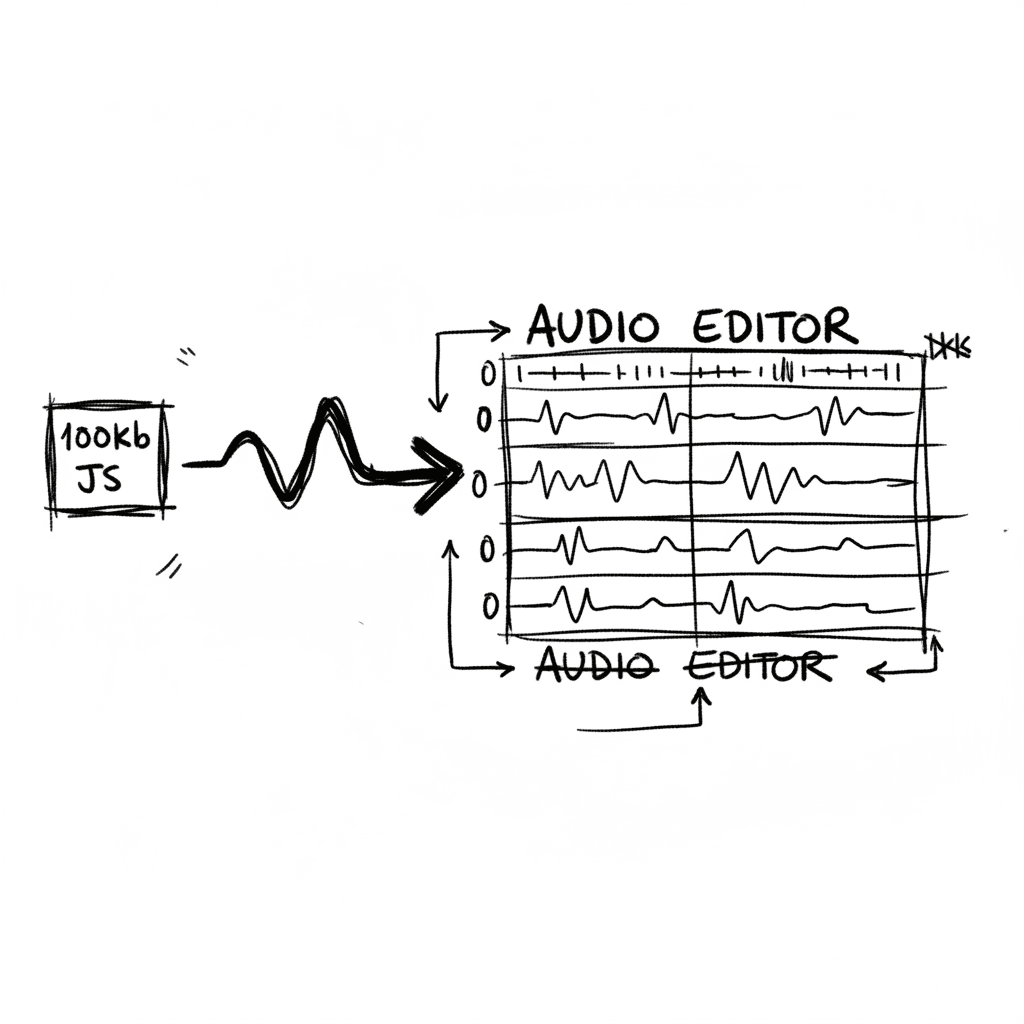
Audiomass: Multitrack Audio Editing via 100kb of Vanilla JavaScript
Audiomass is a browser-based, multitrack audio editor that operates entirely client-side with a remarkably small 100kb footprint (audiomass.co). It provides a workflow reminiscent of classic editors l
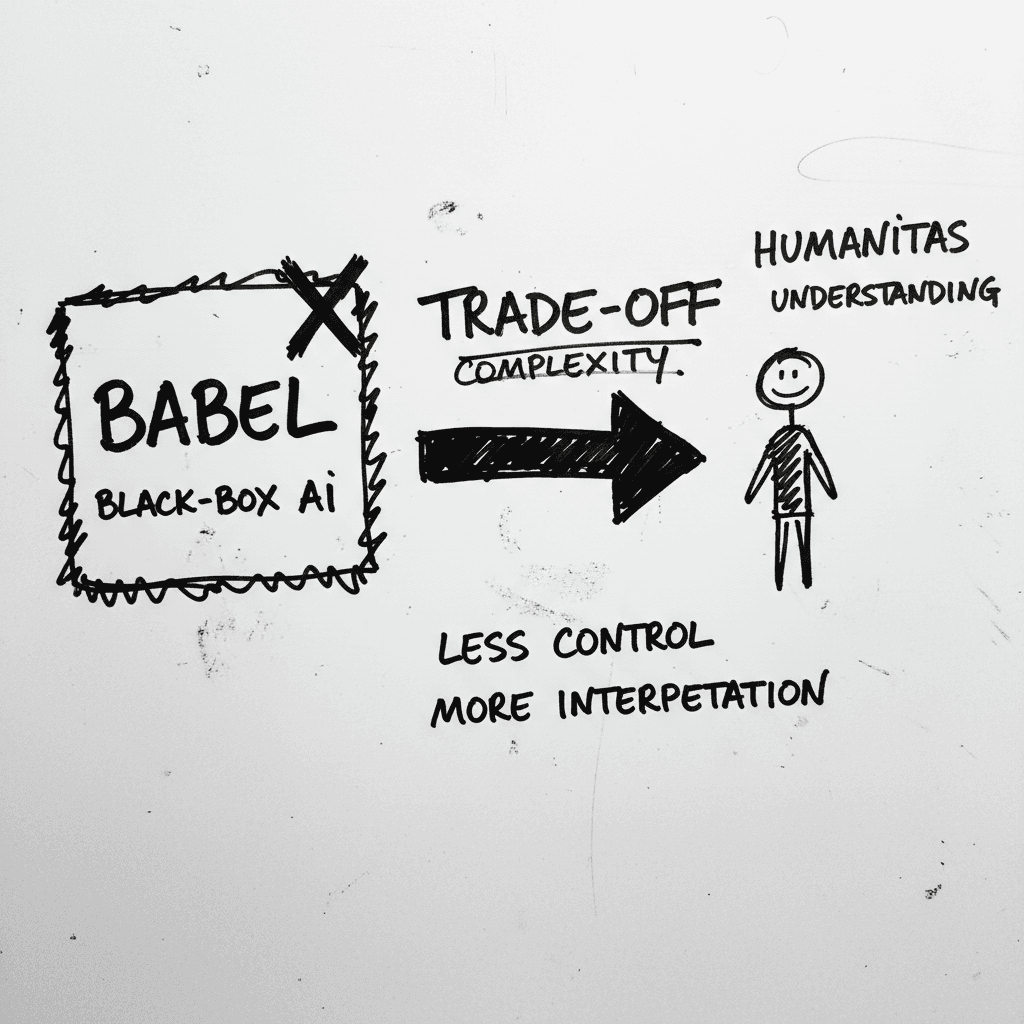
Magnifica Humanitas: The Vatican’s Framework for the GPT-5 Era
The document, signed May 15 and officially released today, was presented at the Vatican alongside Christopher Olah, co-founder of Anthropic and lead of its interpretability team (ncronline.org, Forbes

The Zero-Click Economy: Kagi Search vs. Google AI Mode
Google has effectively pivoted to an "answer engine" where Gemini 3.5 Flash provides conversational summaries, while Kagi remains the primary refuge for users seeking a human-centric, ad-free index. W
Stay Ahead of AI Adoption Trends
Get our latest reports and insights delivered to your inbox. No spam, just data.